



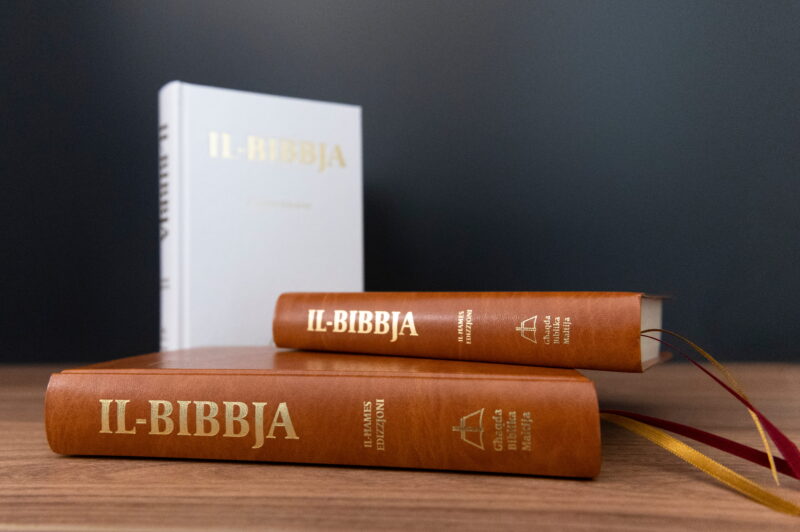
Maltese has some very beautiful expressions that link our relationships with one another to the spoken word. When two people begin to fall in love, we say: “Look at him, he’s talking to a girl.” When two people are in disagreement, we say: “Look at them, they’re not speaking at the moment.” This shows that where there is dialogue, there is also relationship.
From the very beginning of creation, it was God’s delight to “walk in the garden in the cool of the day” and to seek out the human person in order to speak with him (Gen 3:8). Sin abruptly brought this dialogue between God and humanity to a halt. Humanity fell silent and hid itself, but God, in his boundless love, prepared a plan to break the silence and to reach humanity through his Word.
Since God is a God of relationship and love, he wished to continue speaking with us at all times. The tragedy of sin neither restrained him nor prevented him from speaking.
In the sacred books, the Father who is in heaven meets His children with great love and speaks with them … For Sacred Scripture is the word of God inasmuch as it is consigned to writing under the inspiration of the divine Spirit.
Dei Verbum, nos. 21; 9
The Word of God is so powerful that, when it is spoken, it comes to pass. We see this in creation: each time God spoke, he created. What God willed came to be and, in its fullness, took flesh in Christ. “In the past God spoke to our ancestors many times and in various ways through the prophets; in these last days he has spoken to us through his Son” (Heb 1:1–2). It is no coincidence that in the Gospel according to St John, instead of a narrative of Jesus’ birth, we find the narrative of the Word (the Verb or Logos) in the person of Christ.
St George Preca placed a special emphasis on the words spoken by Jesus, calling them “the voice of the Beloved”. He encouraged children to fall in love with the Word of God. Why? “For God so loved the world that he gave his only Son, so that everyone who believes in him may not perish but may have eternal life” (Jn 3:16). For this to happen, it is now up to us—those for whom Christ came—to speak. How? By allowing our lives to become a fitting response to this Word through our actions.
God does not want to speak alone. He wants to enter into dialogue with us. God is waiting for us to commit our lives so that they may become a faithful response, in the way we live and in the way we speak. On this Third Sunday in Ordinary Time, as we celebrate the Word of God, let us renew this love for the Beloved by spending more time with Sacred Scripture, because through it alone we can be sanctified and become more like Christ. There is no more fitting response for this special day than to contemplate this Word which has the power to transform our lives, so that we ourselves may become the delight of the Beloved!