



You are Peter: I will give you the keys of the kingdom of heaven
Twenty-First Sunday in Ordinary Time – Year A
Collect
O God, who cause the minds of the faithful to unite in a single purpose, grant your people to love what you command and to desire what you promise, that, amid the uncertainties of this world, our hearts may be fixed on that place where true gladness is found. Through our Lord Jesus Christ, your Son, who lives and reigns with you in the unity of the Holy Spirit, one God, for ever and ever.
Amen.
Reflection
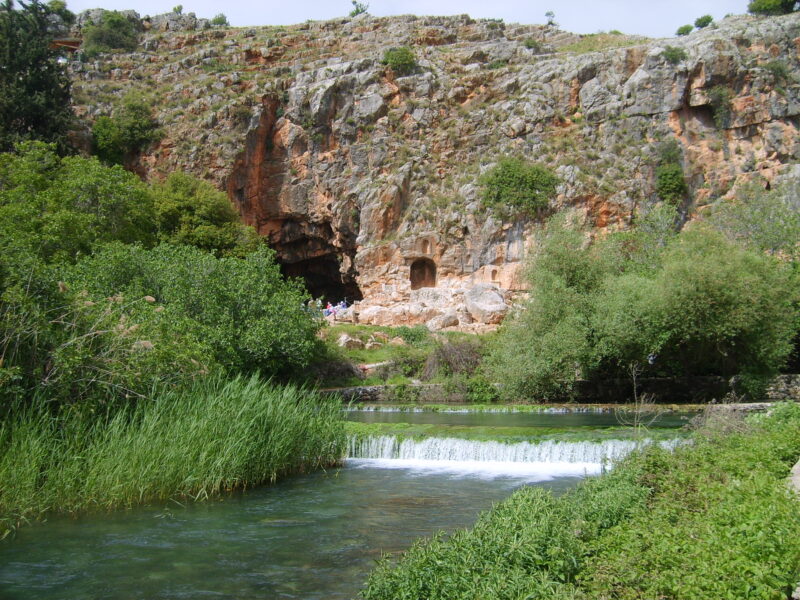
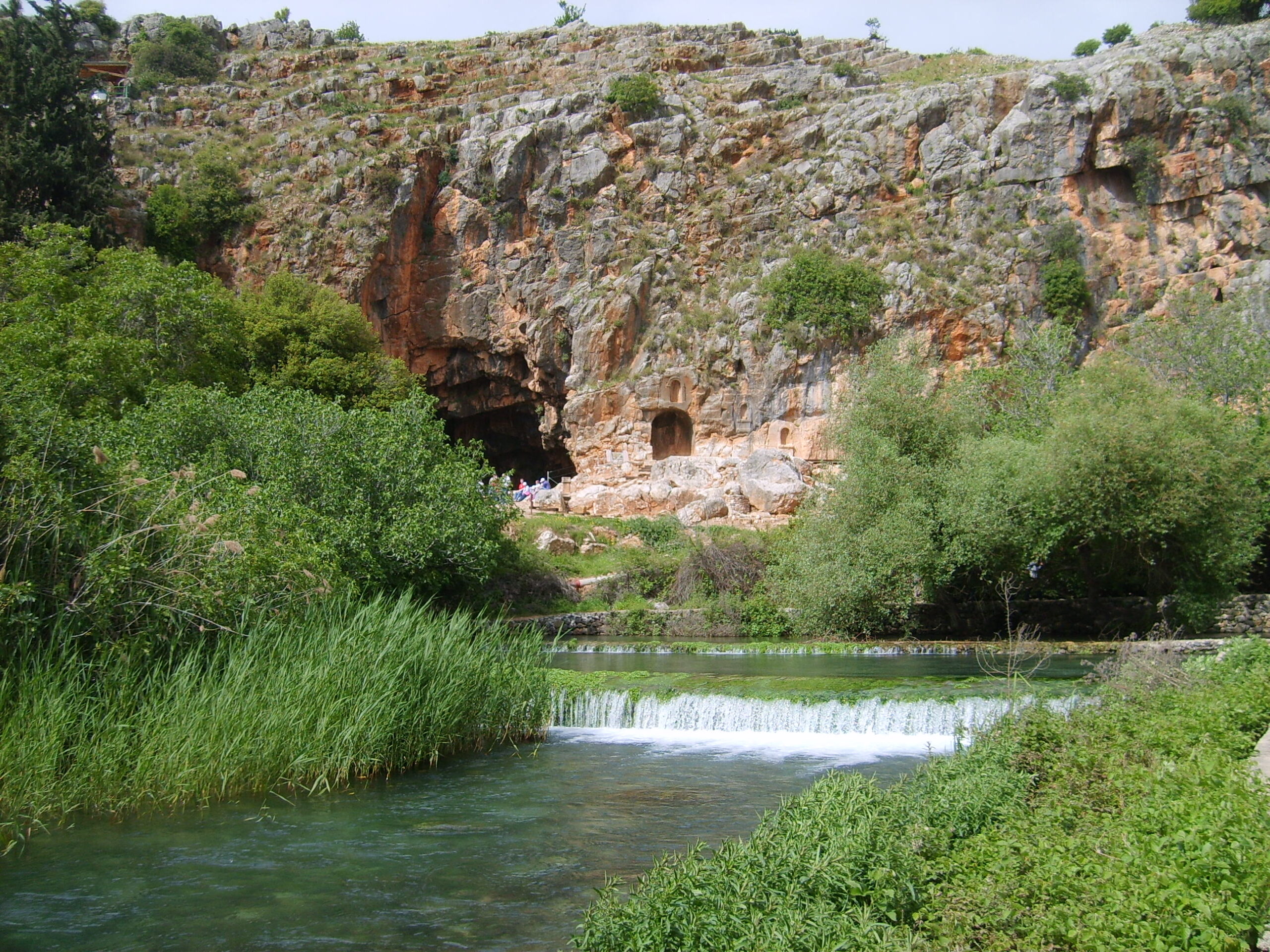
This account is one of those Gospel passages in which geography plays an important part in the meaning of what takes place and what is said. The city of Caesarea Philippi was built on the slopes of Mount Hermon. To this day, the area offers spectacular natural scenery of cliffs, rocks and trees, with a natural spring that is one of the principal sources of the River Jordan, which flows into the Sea of Galilee and continues down to the Dead Sea.
Both the Canaanites and, later, the Greeks built magnificent temples in this place, especially the temple in front of the great cave from which this powerful spring of the Jordan gushes forth. Originally, this temple was dedicated to the god Pan, depicted as half man and half goat. Later, Philip, the son of Herod the Great, built a temple in honour of Caesar, whom he regarded as a god. This is why the new city came to be known as Caesarea Philippi. Behind the temple, within the cave, is a great chasm, so deep that the people of antiquity believed it to be a bottomless abyss and therefore one of the gateways to the realm of the dead, or hell—what is referred to in English as Hades, a term that comes from the Greek and is the very word Jesus uses.
We can therefore better appreciate how evocative the setting was and how powerful Jesus’ words would have sounded when, after Peter’s confession that He is the Messiah, the Son of the living God, Jesus said to him: ‘You are Peter, and on this rock I will build my church, and the gates of hell shall not prevail against it.’ This becomes even more striking when we remember how offensive these temples and the imperial cult were to both the Jews and the early Christians.
Therefore, beyond the question of who Jesus is for me—not what others say about Him or what I have learnt by heart, but who He is for me personally, how I have experienced Him, how I have encountered Him, how the words of Scripture have become a living reality rather than merely a story from the past—this account of Jesus’ question and Peter’s inspired reply also sheds light on what we experience in life as hell, as death, as suffering. Wherever your hell may be—and it can take many forms—it is there that the Lord comes to meet you as well, asking you to profess your faith in Him: not as the One who will shield you from every attack of evil or every trial of life by keeping you wrapped in cotton wool, but to confess your faith in Him as the solid rock on which you will build your life, so that because He is with you, and because you choose to cling to Him and to Him alone, you will not be overcome.
Hell will come against you, but it will not defeat you. You will lose battles—without question, that may well happen—but you will not lose the war. This applies not only to us as individuals, but even more profoundly to us as the Church, the new People of God built upon the confession of faith in Jesus as our one and only Saviour and Redeemer; a Church which itself is threatened by evil and into which evil sometimes finds its way, corrupting it precisely because we ourselves allow evil to corrupt us and, in doing so, wound the whole Body of Christ, the Church.
Prayer
Lord, I do not know whether I can truly make Peter’s confession that You are the Messiah, the Son of the living God. Send Your Holy Spirit upon me, so that He may truly reveal to me the love that the Father has shown me and desires to show me through You. Lead me to a stronger faith in You, not despite alldifficulties, but precisely in the midst of them. May I confess You as my God and my Saviour in the face of the hells of my own life, so that You may cause the living water of Your life to well up within me and strengthen the rock of my life and the rock of Your Church.