


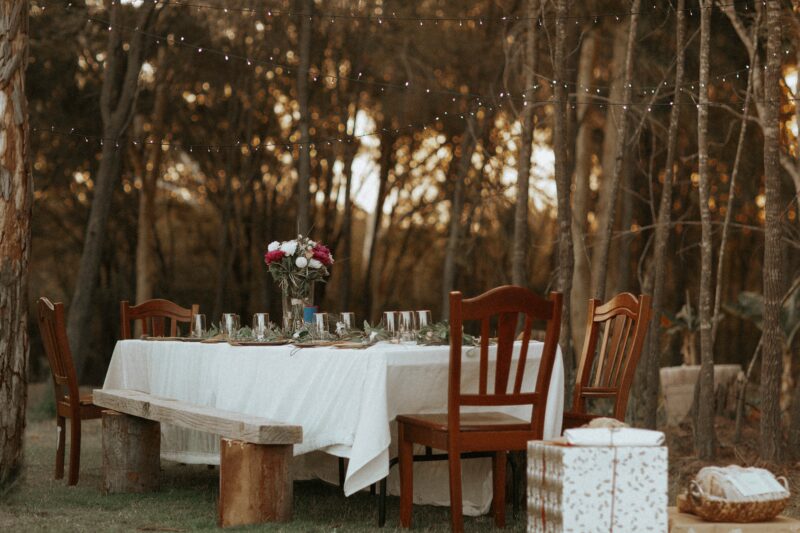

Invite everyone you can find to the wedding

The Twenty Eight Sunday in Ordinary Time Year A

Collect

May your grace, O Lord, we pray, at all times go before us and follow after and make us always determined to carry out good works. Through our Lord Jesus Christ, your Son, who lives and reigns with you in the unity of the Holy Spirit, one God, for ever and ever.

Amen. 

The Lord will prepare a banquet, and will wipe away the tears from every cheek.
Is 25:6-10a

A reading from the prophet Isaiah

On this mountain, the Lord of hosts will prepare for all peoples a banquet of rich food, a banquet of fine wines, of food rich and juicy, of fine strained wines.

On this mountain, he will remove the mourning veil covering all peoples, and the shroud enwrapping all nations, he will destroy Death for ever. The Lord will wipe away the tears from every cheek; he will take away his people’s shame everywhere on earth, for the Lord has said so.

That day, it will be said:

“See, this is our God in whom we hoped for salvation; The Lord is the one in whom we hoped. We exult and we rejoice that he has saved us; for the hand of the Lord rests on this mountain.”

The Word of the Lord.
℟. Thanks be to God.

Psalm 22 (23):1-6

℟. In the Lord’s own house shall I dwell for ever and ever.

The Lord is my shepherd;
there is nothing I shall want.
Fresh and green are the pastures
where he gives me repose.
Near restful waters he leads me,
to revive my drooping spirit. ℟.

He guides me along the right path;
he is true to his name.
If l should walk in the valley of darkness
no evil would I fear.
You are there with your crook and your staff;
with these you give me comfort. ℟.

You have prepared a banquet for me in the sight of my foes.
My head you have anointed with oil; my cup is overflowing. ℟.

Surely goodness and kindness shall follow me
all the days of my life
In the Lord’s own house shall I dwell
for ever and ever. ℟.

There is nothing I cannot master with the help of the One who gives me strength.
Phil 4:12-14, 19-20

A reading from the letter of St Paul to the Philippians

I know how to be poor and I know how to be rich too. I have been through my initiation and now I am ready for anything anywhere: full stomach or empty stomach, poverty or plenty. There is nothing I cannot master with the help of the One who gives me strength. All the same, it was good of you to share with me in my hardships.

In return my God will fulfil all your needs, in Christ Jesus, as lavishly as only God can. Glory to God, our Father, for ever and ever. Amen.

The Word of the Lord.
℟. Thanks be to God.

Gospel Acclamation 
see Ephes 1:17-18

Alleluia. ℟. Alleluia.
May the Father of our Lord Jesus Christ, enlighten the eyes of your mind
so that you can see what hope his call holds for us.
℟. Alleluia.

Invite everyone you can find to the wedding.
Mt 22:1-14

A reading from the holy Gospel according to Matthew

F’dak iż-żmien, lill-qassisin il-kbar u lix-xjuħ tal-poplu Ġesù raġa’ qabad ikellimhom bil-parabboli u qalilhom: “Is-saltna tas-smewwiet tixbah lil wieħed sultan li għamel festa għat-tieġ ta’ ibnu. U bagħat għall-mistednin mal-qaddejja tiegħu biex jiġu għall-festa; imma dawk ma ridux jiġu.

U reġa’ bagħat qaddejja oħra, u qalilhom: “Għidu lill-mistednin: Ara, il-mejda tiegħi lesta; il-barrin u l-għoġiela msemmna diġa’ maqtula u kollox lest; ejjew għall-festa”. Iżda dawk ma tawx kas; min mar l-għalqa, min għan-negozju tiegħu, u l-bqija qabdu lill-qaddejja tas-sultan, żebilħuhom u qatluhom. Is-sultan inkorla ħafna, u bagħat is-suldati tiegħu, qered lil dawk il-qattiela, u ħarqilhom il-belt tagħhom.

Imbagħad qal lill-qaddejja tiegħu: “Il-festa mħejjija, imma lil dawk ma kienx ta’ min jistedinhom għaliha. Mela morru f’salib it-toroq u sejħu għall-festa lil kull min issibu”. Dawk il-qaddejja ħarġu fit-triqat u ġabru lil kull min sabu, ħżiena u tajba, u s-sala mtliet bin-nies għall-mejda. Mela jidħol is-sultan ħalli jara min kien hemm fuq il-mejda, u hemmhekk lemaħ wieħed li ma kienx liebes għall-festa tat-tieġ; u qallu: “Ħabib, dan kif dħalt hawn m’intix liebes għall-festa?”. Dak tbikkem. Imbagħad is-sultan qal lil dawk li kienu qegħdin iservu: “Orbtulu riġlejh u idejh u waddbuh ’il barra fid-dlam; hemmhekk ikun hemm il-biki u t-tgħażżiż tas-snien!”. Għax ħafna huma l-imsejħin, imma ftit il-magħżulin!”.

The Gospel of the Lord.
℟. Praise to you, Lord Jesus Christ.


Reflection

The Prophet Isaiah describes in great detail the banquet that God prepares for his people: rich food, well-matured wines, meat rich in marrow … Isaiah’s description begins and ends with the words “rich” and “choice.” God is the Father who gives his children the finest and the best.

He goes beyond this: he does not merely feed us, but removes the veil that covers the face of the peoples, destroys death, wipes away the tears from every face, and takes away disgrace. And all this is accomplished through the strength and power of his Word. This is the God in whom we have hoped, who has come to save us, who awakens joy and gladness within us because the hand of the Lord rests upon this mountain.

In Psalm 23 we read: “I shall dwell in the house of the LORD for ever.” Who among us would not want to dwell in a house where what the Prophet Isaiah described so beautifully is offered to you and to me in such abundance, where the Lord cares not only for our physical needs but also for our emotional and psychological needs?

He is the true shepherd who cares for his sheep and does not rest until he has led us to the fresh waters where he gives us rest and refreshes us.

To the Philippians St Paul speaks about the paradox of his life: he knew how to live in every circumstance that life offered him, whether in plenty or in hunger, whether in abundance or in need. But St Paul makes it very clear to us that he could not have done this by himself, but only through the strength of God, who strengthened him in his weakness.

St Paul reminds us once again of how much God cares for us by referring to God as the one who provides for all our needs, and this always according to the riches of his glory in Christ Jesus.

St Matthew once again refers us to the abundance of the wedding feast of the king’s son. At one time or another, we have all witnessed the abundance at a wedding feast to which we have been invited. St Matthew speaks of three invitations that the king extends to the guests. They not only refuse and ignore the invitation, but even go so far as to kill the servants who brought it to them.

Could it be that we too sometimes adopt this attitude? The invitation of today’s readings is for us to be grateful whenever God draws near to us to renew his relationship with us through the Sacraments, through the feast that takes place at every Eucharist, both during the week and, especially, on Sunday, and through a life of prayer and open communication with him.

Prayer
Lord, open my eyes and all my senses to the abundance of your love for all humanity in these cruel times of war, including in the Holy Land. Enlighten the minds of those who resort to weapons in the mistaken belief that they can bring about peace by one nation dominating another. Amen.